

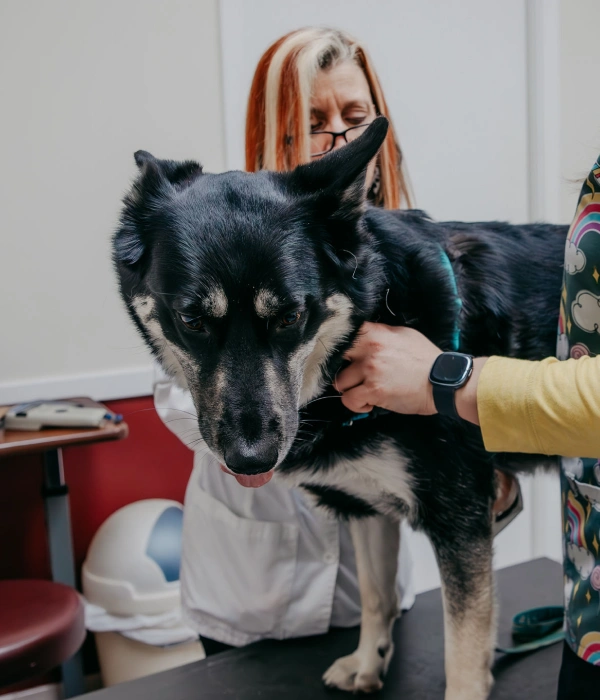
Expert Care Focused on Comfort, Health, and Longevity
We know how important your companion is to you, and it’s our goal to keep him or her happy and living the best quality of life.
Caring For Your Senior Pet
So when is your pet considered a senior? Just as no two pets are alike, senior status varies according to breed and your pet’s life experiences. Generally, dogs over the age of 8 are considered senior. Giant breeds like Mastiffs or Great Danes achieve this status sooner. Toy breeds may not be considered senior until they are 9 or 10. Cats are classified as senior when they reach age 7.
Unless a medical problem arises that requires closer attention, your pet will continue to have regular, yearly exams. As pets age, we may recommend additional wellness screening to help monitor changes before symptoms appear. This can include yearly blood testing to evaluate organ function, red and white blood cell counts, thyroid health, and urinalysis to assess kidney and urinary tract function. We may also recommend more frequent intestinal parasite screening based on your pet’s lifestyle and health needs. Your veterinarian may also begin to discuss age-related health problems, such as:
- Arthritis
- Kidney and liver function
- Heart disease
- Diabetes
- Thyroid problems
- Parasites
- Hypertension
- Weight Management